The Evidence Behind Workplace Mental Wellness
The Refresh Wellness Platform wasn’t created in isolation. It’s built on a growing body of research showing that employee mental wellness is directly tied to focus, productivity, and overall business performance.
Across industries and studies, the findings are consistent: when organizations support how people function day-to-day, they see measurable improvements in engagement, output, and long-term results. The following research highlights the evidence behind this shift.

Realizing the positive ROI of supporting employees’ mental health – Deloitte
This report explores how organizations can translate mental health support into measurable business outcomes. Drawing on data from Canadian companies and insights from industry leaders, it highlights both the challenges and the real opportunities in building effective workplace mental health programs.
The findings show that investing in employee mental wellness is not just a cost—it’s a lever for improving performance. Organizations that focus on high-impact areas, track outcomes, and build on existing initiatives are better positioned to reduce productivity loss, manage rising costs, and create more resilient teams.
Importantly, the report reinforces a shift in thinking: mental health at work is not about starting from scratch or reacting to problems—it’s about intentionally supporting how people operate every day. When this becomes part of the way work is designed and managed, companies see stronger engagement, more consistent performance, and a clearer return on investment.
The ROI in workplace mental health programs: Good for people, good for business – Deloitte
This report provides a practical framework for how organizations can build mentally healthy workplaces—from leadership and culture to policies and day-to-day practices. It emphasizes that mental wellness is not a standalone initiative, but something that must be embedded into how work is designed, managed, and experienced.
The blueprint highlights that when organizations take a proactive and structured approach to mental health, they see improvements in employee engagement, reduced absenteeism, and stronger overall performance. It also underscores the role of leadership, communication, and psychological safety in shaping how employees show up and function at work.
At its core, the report reinforces a key idea: sustainable performance comes from environments where people feel supported, capable, and able to perform at their best—not just when challenges arise, but as part of everyday work

Mental Health at Work – World Health Organization
This report examines the financial impact of mental health in the workplace, highlighting the significant costs associated with inaction—particularly in areas like absenteeism, presenteeism, and reduced productivity. It brings together economic data and research to quantify how mental wellness directly affects organizational performance.
The findings reinforce a clear pattern: when employee mental wellness is supported, organizations see measurable returns. Improvements in focus, engagement, and overall functioning lead to stronger output and more sustainable performance across teams.
The report supports a more practical approach—one that focuses on how people operate day-to-day at work. By investing in systems and tools that help employees manage stress, maintain energy, and stay focused, organizations can reduce hidden costs and unlock more consistent productivity.

Workplace Mental Health: A Leadership Priority – CAMH
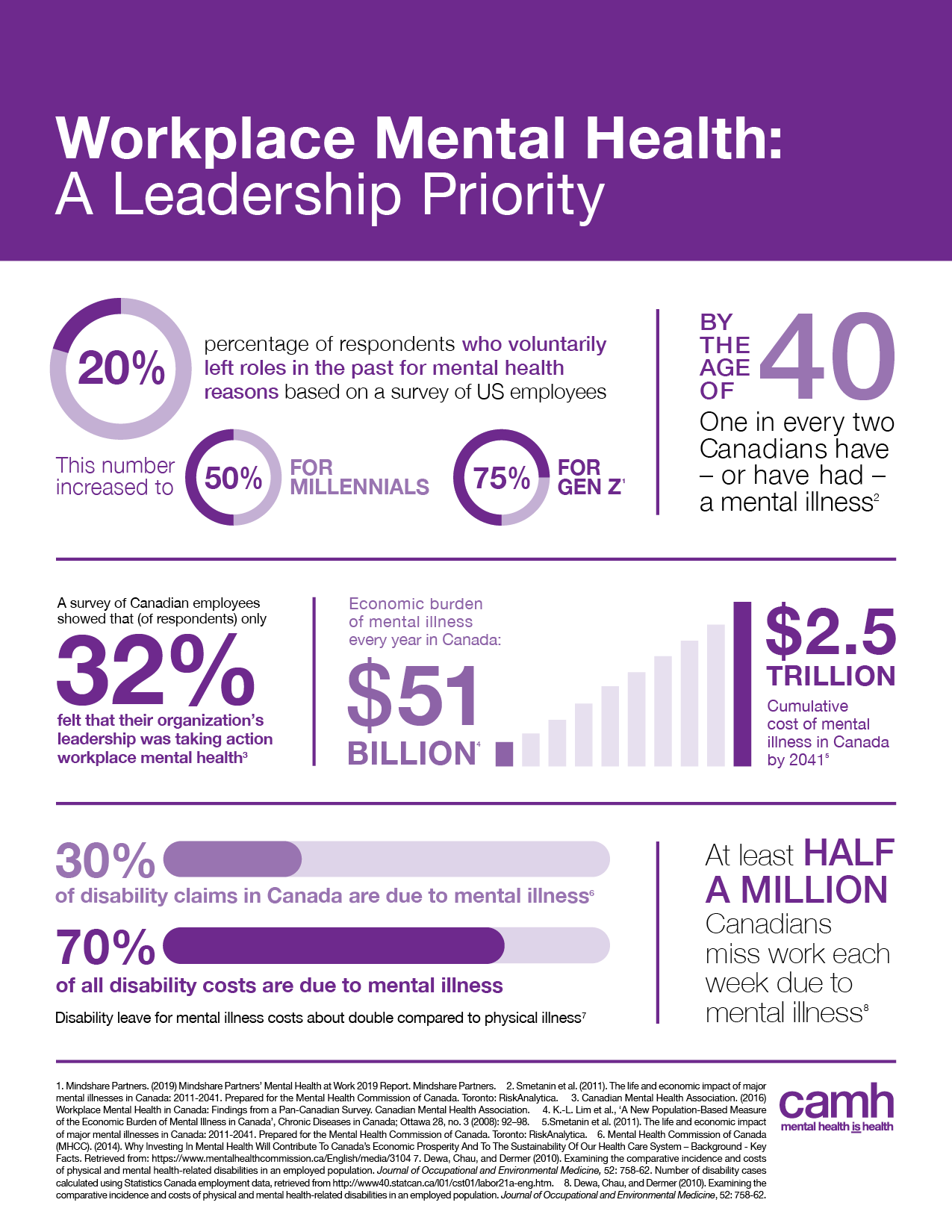
This report highlights the growing impact of mental health challenges on the workforce—and the significant cost of inaction for organizations. From rising absenteeism and disability claims to increased employee turnover, the data shows that mental wellness is directly tied to how effectively teams are able to function.
The findings point to a clear gap: while mental health issues are widespread, many organizations are still not taking meaningful action. As a result, businesses are absorbing substantial economic costs, both immediately and over time.
Importantly, the report reinforces that workplace mental wellness is not just an HR concern—it’s a leadership priority. Organizations that actively support their employees’ mental wellness are better positioned to reduce disruption, improve productivity, and build more stable, high-performing teams.
Economic Analyses of Workplace Mental Health/Substance User Interventions: A Systematic Literature Review and Narrative Synthesis – CAMH
This research brings together findings from dozens of studies to examine how workplace mental health interventions impact both employees and employers. The conclusion is clear: supporting mental wellness at work is not just beneficial for people—it delivers measurable business value.
Across the studies reviewed, interventions such as cognitive behavioural therapy, access to occupational health support, and targeted programs were shown to reduce mental health-related sick leave, improve return-to-work outcomes, and, in many cases, generate cost savings for employers.
At a broader level, the research reinforces a key idea: mental wellness directly affects how people show up at work. When employees are supported, they are more focused, more consistent, and more capable of performing at a high level—leading to stronger productivity and long-term return on investment for organizations.

Strengthening the Case for Investing in Canada’s Mental Health System: Economic Considerations – Mental Health Commision of Canada
This report outlines why workplace mental health should be treated as a core business investment, not just a support initiative. It shows that mental health challenges directly impact productivity, attendance, and overall organizational performance—creating measurable costs for both employers and the broader economy.
While awareness of mental health has increased, many organizations still lack structured, practical approaches to address it. This gap between understanding and action leads to ongoing disruption, reduced efficiency, and long-term financial impact.
The report makes a clear case: organizations that invest in mental wellness are not just supporting their people—they are strengthening performance, reducing risk, and building more resilient, effective teams.